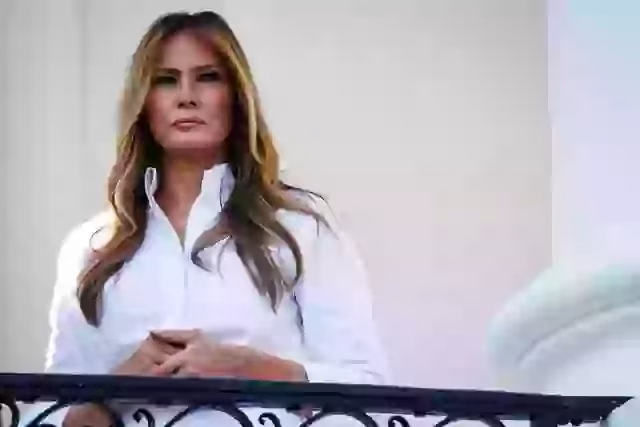
Trump’s inadvertent revelation about calling Melania “First Lady” in their most intimate moments provides an unprecedented and deeply uncomfortable glimpse into the private dynamics of America’s First Marriage while raising profound questions about power, intimacy, and psychological health at the highest levels of government. The incident demonstrates how Trump’s psychological need for status and validation infiltrates even his most private relationships, creating dynamics that prioritize his own sense of achievement over genuine emotional connection.
The public reaction to this revelation reflects broader concerns about Trump’s capacity for healthy relationships, emotional intimacy, and appropriate boundaries between public and private life. The widespread discomfort expressed by observers suggests that most Americans recognize this behavior as unusual and psychologically concerning, even if they cannot articulate exactly why it feels so wrong.
The incident also highlights the ways that Trump’s compulsive need to share personal information can sabotage his own political messaging and create unnecessary controversies that distract from his intended political objectives. His inability to maintain appropriate boundaries between public and private discourse represents a continuing liability that affects both his political effectiveness and his personal relationships.
Perhaps most importantly, this revelation provides insight into the psychological dynamics that drive Trump’s behavior across all contexts, from his political decision-making to his personal relationships. The pattern of prioritizing status and achievement over emotional connection and mutual respect has implications that extend far beyond his marriage to affect his approach to governance, diplomacy, and leadership.
As Americans continue to evaluate Trump’s fitness for continued political leadership, incidents like this provide important data points about his psychological makeup, his capacity for healthy relationships, and his ability to maintain appropriate boundaries and judgment. The fact that even his most intimate relationships serve primarily to reinforce his own sense of status and achievement rather than to provide mutual support and connection offers concerning insights into his approach to all forms of human interaction and responsibility.
The lasting impact of this revelation will likely depend on how it fits into broader patterns of behavior and whether voters view such psychological characteristics as disqualifying for political leadership or simply as additional evidence of Trump’s unconventional approach to both public and private life.